Wednesday, 3 December 2014

Lighting Terms

Lighting terms

  • Key light
-The main source of light in a photograph or film.
  • Fill Light
- A supplementary light that is used to lighten shadows.

  • Back light
- Separates the main character from the background.

  • Ambient/naturalistic/ artificial/ low key
- Any form of light that hasn't been added. 
  • Accent/ spotlight 
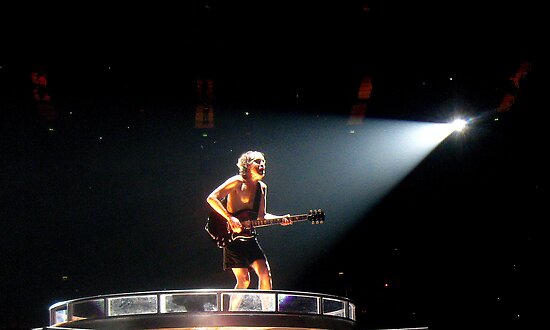
-A narrow beam of light directed to a certain part of the scene or character.

Friday, 14 November 2014

Preliminary task preview

Preliminary task preview
This was a continuity task that involved filming and editing in small groups.
The main character closes a door, walks down a short hallway and then opens a door. she then sits down on a decking ledge next to another character.
The two characters then exchange a few lines of dialogue.
This task was to demonstrate a match on action, shot/ reverse shot and the 180 degree rule.
We did a storyboard with pictures to fully demonstrate what we wanted to happen.


Thursday, 13 November 2014

Match on action and rule of thirds.


Definition: Match on action is continuity editing in which one shot cuts to another and therefore portrays an action. An example of this is shown in my Preliminary task, the opening and walking through of a door.


Rule of thirds: the rule of making sure nothing in the shot is directly in the centre and is a little off.


In making a storyboard we had to have two attempts.
we where not able to use the first because it did not follow the rule of thirds as it was too cantered.so we did another version, this time ensuring we followed the rule of thirds.

Opening sequences

Opening Sequences


Opening sequences are used to introduced the beginning of the film and show that actors and producers names. It gives us an idea of what the film will be about and what type of genre it will be about.

The first ironman title sequence is a good example. its soundtrack, colour scheme, presentation of names and background art all representations of the film to come. 
the obvious red and gold colours reference the colour of the suit tony stark makes. The writing is bold and simple matching the colours and main character. the background art is all about the mechanical suit that is made during the film. It has all been put together in a creative and interestingly almost 3d way.

Coraline is completely different in a many ways but still follows a rough guideline. It has music, titles, colour schemes and and also have background art. But is completely different due to the small details. the colour scheme is dark and mysterious like the movie. the writing style of the tittles also match as they are delicate. the movie has mainly dim colours and so dose this opening sequence. the background is similar in the way that it gives background and relates to the story line.




Prelimeray task


This is our end production of our primary task. it is 35seconds in total.The girl is meeting up with a drug dealer, she walks through the obstacle of a door. I think this is a bit more realistic in the way that doors aren't always just open or not there. She is also threatened and warned of what will happen if she doesn't pay in time.


 I think this scenarios is relevant to our age group and is a common worry so therefore relatable.I think it worked well, although I think it may have worked better if the transitions of the slides worked smother. We also had a few filming mistakes such as the reflection of the camera men in the glass of the door and the window. Although these are not very obviously I would try to make sure this doesn't happen again in the future. I think more shot reverse shots would have worked well in this situation as they are having a conversation. We would then be able to see there facial expressions and emotions better.
I do however think it was successful in the way that it did convey a short piece of a film and was useful in order for us to learn new skills.

Thursday, 16 October 2014

Silent movie


In class we used media editing to make a shot sequence of pictures to show some "big news".
our topic was engagement. The final product is above for you to watch.
We used greyscale effect to make the scene more dramatic.
It also referred back to the old silent movies which was something we enjoyed and thought could be relevant to the video as it has no sound.
Our "big news" was that the daughter is engaged and is breaking the news to her parents.

Tuesday, 14 October 2014

Soundscape sound task


In class we where asked to create a soundscape of world war one. This is the result.
I wanted it to sound personal, so I incorporated the heart beat that is slowly decreasing in speed as the soldier dies, the end of the clip is when he dies.  I also incorporated all the other sound I though would have been going on in that moment, the guns and plains, the slight sound of thunder. I think next time I may go for a simpler set of overlays, but I do think this was effective for what was required of us in this sound task.

Thursday, 9 October 2014

Sound and editing

Sound and Editing

Sound
Sound is a key part of any scene or movie. If the sound is not appropriate or in sync it is very obvious and frustrating. so a lot of time is spent ensuring that the soundtrack and dialogue are correct.
  • Music
- Diagetic (from within the scene)
- Non-diagetic (not from the scene)
  • Dialogue
- ADR
  • Sound FX
- Object noises e.g gun shot, phone call, etc.(Foley)
  • Atmospheric 
- e.g. Theme music

Editing

Editing is also a crucial part of any film or scene as the audience  must be able to understand what is happening. A scene is not necessarily filmed in the order it is supposed to be shown in. So the sections are edited together in a way that makes sense.
  • Cut - change scene, compress time, vary the point of view or montage (build up an image or idea)
  • matched cut-continuity of direction,completed action
  • jump cut- from one place to another
  • motivated cut-pointed out are vie the character
  • cutting rate-type of scene, e.g. action/ dialogue
  • cutting rhythm -how well it flows
  • cross-cut-slow angle change
  • cutaway-reaction shot 
  • insert
Editing transitions
  • buffer -intermediate shot 
  • fade/dissolve -in and out of a colour
  • super impositions -laying a shot over another
  • wipe -slide across the screen
  • inset -shot within a shot
  • split screen -two screens at the same time
  • stock shot -you cant film a shot so go to a shot library to find it.

Wednesday, 17 September 2014

The 180 degree rule

The 180-degree rule  is a guideline for camera shots.
It is how to show that there is a conversation between two people without having them in one frame.
It is so that the one actors head is always on the left side of the screen and the other actors is always in the right side of the frame.
This is so that we know that they are opposite each other rather than next to each other.


Tuesday, 16 September 2014

Shots and camera shots


Different shots and camera movement


In this scene there are numerous shot. These include-
  • A long shot- to emphasise the scale of the scene.
  • A reverse angle- to give the point of view of the character
  • A point of view shot- to show us what the character sees
  • A medium close up - to show emotion or drama
  • A birds eye view- to show the explosion in a more dramatic way
  • The camera is moved as a handheld so we arte moving with the characters.
  • There is also a boom shot this provides emphasis on the scene